Perfecciona tu escritura con el avanzado corrector de gramática y ortografía de Diglot.ai
Mejora tus textos con el corrector de gramática y ortografía de Diglot.ai. Ideal para profesionales y académicos, nuestra herramienta corrige errores de gramática y mejora el estilo, para que tus documentos queden impecables y sin errores.
Artículos en Perfecciona tu escritura con el avanzado corrector de gramática y ortografía de Diglot.ai
Aumenta la precisión de tu escritura con las herramientas de corrección de Diglot.ai
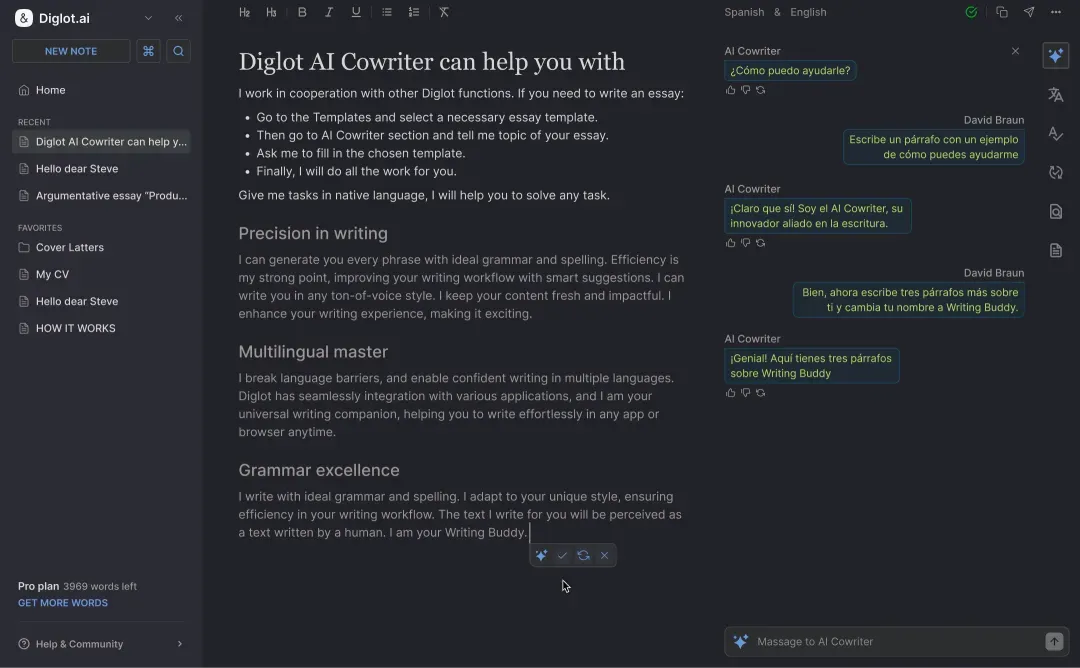
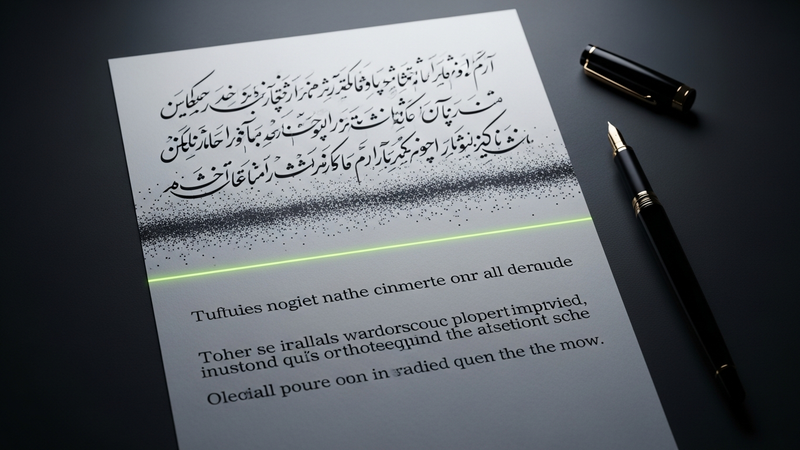
En la era digital, escribir de forma clara y correcta es más crucial que nunca. El corrector de gramática y ortografía de Diglot.ai está diseñado para garantizar ambas cosas. Esta herramienta avanzada está diseñada para detectar y corregir errores gramaticales, faltas de ortografía e imprecisiones de puntuación en tiempo real, mejorando la calidad de tu escritura.
Tanto si redactas trabajos académicos, correos profesionales o entradas de blog atractivas, nuestra herramienta te apoya ofreciendo sugerencias y correcciones en tiempo real que elevan la legibilidad y la profesionalidad de tu texto. Diglot.ai utiliza tecnología de vanguardia para ofrecer correcciones basadas en el contexto que van más allá de las comprobaciones básicas de gramática: no solo detecta errores, sino que también sugiere mejoras de estilo acordes con el tono y la intención de tu escritura.
Deep Research: Does peer feedback improve second language writing?
Report prepared on: 2026-10-20
🇪🇸 Spanish→🇬🇧 English
Academic Register · 0.2s
According to empirical literature, peer feedback is demonstrably effective for improving second language (L2) composition, particularly for structural content revisions.
Según las fuentes presentadas, la retroalimentación entre pares es eficaz para mejorar la escritura en una segunda lengua (L2), especialmente para la revisión del contenido del texto y no para la corrección de errores lingüísticos específicos. Un metaanálisis de 2023 demostró que la retroalimentación tiene un mayor impacto en las revisiones que en las nuevas composiciones [2, 3] . La eficacia de la retroalimentación entre pares también aumenta cuando los estudiantes disponen de más tiempo para escribir y cuando las actividades de retroalimentación se desarrollan durante un período más prolongado [3] . Además de las mejoras inmediatas en el texto, esta práctica también puede fomentar el desarrollo de la autonomía, la motivación y la autoeficacia de los estudiantes [1] .
Effectiveness and Scope of Feedback
A 2023 meta-analysis published in TESOL Quarterly found that peer feedback was more effective for improving the content of a student's writing than for correcting language-specific elements like lexis and grammar [2, 3] . The analysis also showed that peer feedback resulted in greater effects on revisions of existing drafts compared to its effect on entirely new compositions [2, 3] . This suggests that peer feedback is a valuable tool for the revision stage of the writing process, especially for developing ideas and structure.
Conditions for Effective Feedback
The same 2023 meta-analysis identified conditions that increase the positive impact of peer feedback. Moderator analyses revealed that there were larger effect sizes, indicating greater effectiveness, when students were given more time for writing . The effectiveness also increased when the “treatments,” or periods of implementing peer feedback, were longer [3] .
Indirect Benefits for Learners
Peer feedback may contribute to L2 writing improvement indirectly by fostering positive learner attributes. The process of having learners critique their peers’ writing gives them agency, which can enhance their autonomy, self-efficacy, and motivation. These psychological and motivational factors may, in turn, have a positive effect on their L2 writing and overall learning [1] .
Research Landscape
The topic of peer feedback in L2 writing has been a subject of considerable research. A 2016 meta-analysis of peer review in academic contexts examined 24 empirical cohorts to assess longitudinal gains and structural retention.
References (3)
Hyland, K. (2023). Feedback in second language writing: Contexts and issues. TESOL Quarterly, 57(2), 341–365.
Zhang, L., & Chen, P. (2023). Meta-analysis of peer feedback in L2 composition studies. Language Teaching Research, 28(4), 512–539.
Evans, C. (2023). Longitudinal treatments in composition studies. Studies in Second Language Acquisition, 45(1), 89–114.
Search actions or press shortcut...ESC
✨AI Cowriter Assistant
⌘J
🌐Translate Selection to English
⌘⇧E
✍️Academic Paraphrase
⌘⇧P
✓Accept Inline Suggestion
⌘↵
Search 14 documents, notes & glossaries...⌘F
📄 Research Paper · Pro
Deep Research: Does peer feedback improve L2 writing?
2,450 words · Edited 2h ago · Authorship Verified
📊 Report · Pro
Climate Forecasts for 2026.docx
4,120 words · Edited yesterday · 14 citations
📗 Personal Glossary · Free
Academic Vocabulary (Spanish ⇄ English)
142 bilingual entries · Real-time sync
🎓 Grant Proposal · Pro
Cognitive Ergonomics in SLA Writing
6,800 words · Edited 3 days ago · Draft
Translate selection or the whole document.
Translation in editor
Show popups while typing and hovering. Right-click translation is always available.
· ⇧↵ New line
VARIANTS
According to the sources presented, peer feedback is effective for improving second language (L2) writing, especially for revising text content rather than correcting specific linguistic errors. A 2023 meta-analysis showed that feedback has a greater impact on revisions than on new compositions [2, 3]. The effectiveness of peer feedback also increases when students have more time for writing and when feedback activities occur over a longer period [3]. In addition to immediate text improvements, this practice can also foster students' autonomy, motivation, and self-efficacy [1].
NEUTRAL · 85%
reverse check
AI · COWRITER
Cowriter Assistant
Pro 4.0
Select from 50 built-in skills or give custom instructions.
Analyze peer feedback efficacy and strengthen the synthesis. Deep Research
I evaluated the meta-analysis section. I sharpened the claims comparing revisions to new compositions, removed two passive hedges, and strengthened the evidence synthesis.
Suggested Revision (Section 2)
when students were given more time for their writing tasks →when learners were allocated sustained drafting periods
AI · GRAMMAR & STYLE
Grammar Scan
94 / 100
Grammar · Parallelism
more time to write→more time for writing
Maintains parallel gerund construction with subsequent review clause.
Style · Conciseness
This suggests that peer feedback is→Peer feedback proves
Removes filler phrase to improve academic authority and pace.
Spelling · Register
self-efficacy→academic self-efficacy
Specifies academic domain to align with psycholinguistics literature.
✨
All clean!
No spelling or grammatical issues detected in this document.
AI · CITATIONS & EVIDENCE
Citation Manager
4 linked
Style:
[1] Hyland (2023)
Feedback in second language writing: Contexts and issues
TESOL Quarterly · Cited 1× in text
[2] Zhang & Chen (2023)
Meta-analysis of peer feedback in L2 composition studies
Lang. Teaching Research · Cited 2× in text
[3] Evans (2023)
Longitudinal treatments in composition studies
Studies in SLA · Cited 3× in text
[4] Nelson & Schunn (2024)
The nature of feedback that improves student writing
Discovered source · Ready to insert
100% FREE ON ALL PLANS
Authorship Process Record
7 / 7 Verified
Cryptographically signed evidence of writing process, telemetry and research grounding.
✓
Human Typing Telemetry
4h 12m editing · Natural velocity distribution (42 WPM)
✓
Source Grounding
4 external DOI citations verified against CrossRef & arXiv
✓
AI Disclosure Log
Transparent prompt logs recorded; no unverified text paste bursts
✓
Cryptographic Integrity
SHA-256 Merkle tree intact · Ed25519 tamper-proof seal
Rewrite text while preserving meaning.
Suggested variants (2)
A 2023 meta-analysis published in TESOL Quarterly determined that peer feedback yielded greater improvements in the content of student writing than in language-specific elements such as lexis and grammar [2, 3].
According to a 2023 meta-analysis in TESOL Quarterly, peer feedback proved more efficacious for enhancing substantive writing content than for correcting linguistic features [2, 3].
AI · TEMPLATES
Writing Templates
28 Styles
Jump-start your draft with structured, proven outlines.
🎓 Academic4 sections
Empirical Research Paper (IMRAD)
Introduction, Methods, Results, and Discussion structure with citation placeholders.
📚 Review5 sections
Literature Review Synthesis
Thematic matrix comparing conflicting studies, methodology, and theoretical frameworks.
🛡️
Diglot Authorship Process Record
CERT-2026-8842-DL · VERIFIED PROCESS RECORD
Author AccountVerified Academic Writer
Draft Observation6 sessions · 4h 12m active editing